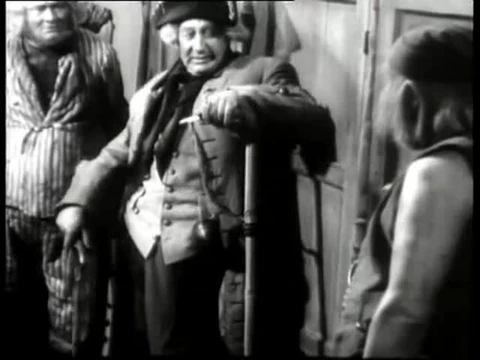
Lord Jim
A novel about a seaman's fall and search for redemption.

via Wikipedia: Lord Dunsany · see source
The story follows a young British seaman named Jim who abandons a passenger ship in distress and is publicly censured, then seeks redemption and acceptance in a remote village.
- author
- Joseph Conrad
- field
- Literature
- genre
- Novel
- known_for
- Story of a seaman's moral crisis and quest for redemption
Lore & Background
An early and primary event in the story is the abandonment of a passenger ship in distress by its crew, including a young British seaman named Jim. He is publicly censured for this action and the novel follows his later attempts at coming to terms with himself and his past and seeking redemption and acceptance. The Patna and its passengers are later brought in safely by a French navy crew, and Jim is the only crew member to testify at the magistrate's court, losing his certificate to sail.
Reader's Guide
The novel is significant for its exploration of guilt, honor, and the possibility of redemption. Marlow helps Jim find positions in various ports, but Jim leaves each time the memory of the Patna incident catches up with him.
Did You Know?
- Captain Brierly, a captain of perfect reputation on the court panel, commits suicide days after the trial.
- Jim is executed by Doramin using flintlock pistols given to Doramin by Stein.
Literary Legacy & Fantasy Genre Foundations
Lord Dunsany's body of work is staggering in scope—over ninety published volumes spanning short stories, plays, novels, and essays, with additional material appearing after his death. Critics have long argued that his early imaginative output helped lay the structural and tonal groundwork for the fantasy genre as it would later be understood. His involvement in the Irish Literary Revival further embedded his writing in a broader cultural movement, and his collaboration with figures like W. B. Yeats and Lady Gregory, along with his support for the Abbey Theatre, placed him at the intersection of literary innovation and national cultural identity. His output was not merely prolific but varied, touching drama, mythology, and speculative fiction in ways that few of his contemporaries attempted.
Military Service & the Easter Rising Wound
Dunsany's military career spanned three conflicts. He first saw action as a second lieutenant in the Coldstream Guards during the Second Boer War. In the First World War, he was appointed Captain in the Royal Inniskilling Fusiliers, stationed at Ebrington Barracks in Londonderry. After recovery at Jervis Street Hospital and the King George V Hospital, he returned to duty. A poignant footnote: his military belt, lost during that episode, was later used at the burial of Michael Collins. In the war's later stages, he served in the trenches and wrote propaganda for the War Office. In the Second World War, he enlisted in both the Irish Army Reserve and the British Home Guard, serving actively in Shoreham, Kent, the English village most heavily bombed during the Battle of Britain.
Aristocratic Life & Social World
Born in London as heir to one of the oldest Irish peerages, Edward Plunkett grew up between Dunstall Priory in Shoreham, Kent, and Dunsany Castle in County Meath. Lady Beatrice became a vital partner in his literary life, typing manuscripts, selecting work for collections, and overseeing his literary heritage after his death. Socially, the Dunsanys moved in Dublin and London literary circles. Through his uncle Sir Horace Plunkett, Dunsany was introduced to figures like George William Russell, Oliver St. John Gogarty, and W. B. Yeats. He also socialized with George Bernard Shaw, H. G. Wells, and was a friend of Rudyard Kipling.
Personal Interests & Later Life
Beyond his writing and military service, Dunsany was known as a champion of both chess and pistol shooting in Ireland. He even devised his own asymmetrical variant of chess, known as Dunsany's chess. He was an avid traveller and hunter, and his later years reflected a life shaped by both aristocratic tradition and personal curiosity. Trinity College Dublin awarded him an honorary doctorate in recognition of his contributions. His mother was a cousin of Sir Richard Burton, and from her he inherited his considerable height of 1.93 metres.
More in British Literary Classics 1-17
Spotted an error? Know more?
This is a living reference — every entry is fact-audited, and reader corrections feed straight into our audit queue. Suggest an edit · See this site's audit record