Oliver Twist
Second novel by Charles Dickens, exposing orphan cruelty.

via Wikipedia: Oliver Twist · see source
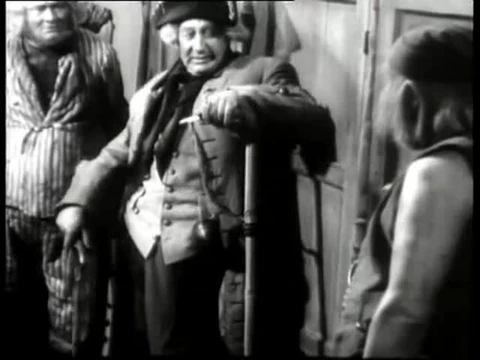
Oliver Twist; or, The Parish Boy's Progress is the second novel by English author Charles Dickens. It was originally published as a serial from 1837 to 1839 and as a three-volume book in 1838. The story follows orphan Oliver Twist, who, after being raised in a workhouse, escapes to London, where he meets a gang of juvenile pickpockets led by the elderly criminal Fagin, discovers the secrets of his parentage, and reconnects with his remaining family. Oliver Twist unromantically portrays the sordid lives of criminals and exposes the cruel treatment of the many orphans in England in the mid-19th century. The alternative title, The Parish Boy's Progress, alludes to Bunyan's The Pilgrim's Progress as well as the 18th-century caricature series by painter William Hogarth, A Rake's Progress and A Harlot's Progress.
- author
- Charles Dickens
- published
- 1837–1839 (serial), 1838 (three-volume book)
- genre
- Social novel
- nationality
- English
- known_for
- Exposing child labour, domestic violence, and the recruitment of children as cri
Verified Timeline
Lore & Background
Oliver Twist is born into a life of poverty and misfortune, raised in a workhouse in a town some 70 miles from London. The children working there receive very little food; after six months, they draw lots, with the loser asking for another portion of gruel. Oliver is designated, and so he approaches the master of the workhouse and requests a second helping. A great uproar ensues at this perceived act of rebellion. Oliver is removed from the workhouse and put in solitary confinement; he is flogged every day by the beadle, Mr Bumble, of which three times a week are in front of the other boys. After some time Oliver is offered at a premium as an apprentice; he is taken on by Mr Sowerberry, an undertaker. One day, his jealous co-apprentice, Noah Claypole, insults Oliver's mother and an enraged Oliver attacks him. When he is punished by Mr Bumble and Mr Sowerberry, Oliver runs away to London to seek a better life. Oliver meets a young man named Jack Dawkins who calls himself 'the Artful Dodger', offers him food and lodging and takes him to meet an infamous criminal known as Fagin, who trains orphan boys as pickpockets. Oliver innocently begins Fagin's training, but when he goes out with the Dodger and another boy and sees them stealing a handkerchief from an old gentleman named Mr Brownlow, he realizes the truth. While the Dodger and the other boy escape, Oliver is pursued, apprehended, formally arrested and tried before Magistrate Fang. Interceding for Oliver, Brownlow takes him home and cares for him. As Oliver recovers, Brownlow and his housekeeper notice that Oliver resembles a woman depicted in a portrait hanging in Brownlow's home. Worried that Oliver might incriminate him and his gang, Fagin sends a young woman named Nancy and her abusive lover, the robber Bill Sikes, to abduct Oliver and bring him back to Fagin's lair. Fagin forces him to participate in a burglary planned by Sikes. The robbery goes wrong; while Sikes escapes, Oliver, after having been wounded, ends up in the care of the people he was supposed to rob: Miss Rose and her guardian Mrs Maylie. A mysterious man, known only as 'Monks', teams up with Fagin, to prevent Oliver from learning of his past. Monks bribes Mr Bumble and his new wife, the former Widow Corney, for information on Oliver. Together, they dispose of a ring and medallion that had once belonged to Oliver's mother and had been stolen from her after she died. Nancy, racked with guilt for her role in Oliver's kidnapping, secretly spies on them and passes the information on to Rose Maylie, who tells Mr Brownlow. Meanwhile, the Artful Dodger is arrested for pickpocketing, tried and sentenced to transportation to Australia. Noah Claypole, who had fled to London with the Sowerberrys' maid Charlotte after robbing Mr Sowerberry, joins Fagin's gang. Following Fagin's orders, he follows Nancy and discovers that she meets with Mr Brownlow and Rose for the sake of Oliver's welfare. Fearing that Nancy has betrayed him and Sikes (which, unknown to him, she has refused to do), Fagin passes the information on to Sikes, who beats Nancy to death in a fit of rage and goes into hiding. He is recognised by an angry mob and attempts to flee. Going to Toby Crackit's hideout, he learns that Fagin has been arrested. When the mob catches up to him, Sikes tries to escape over the rooftops by swinging on a rope, but while he is about to loop the rope about himself a vision of the dead Nancy's staring eyes terrorises him into losing his balance. In the fall, the looped rope catches him around the neck and hangs him. Mr Brownlow has Monks arrested and forces him to divulge his secrets: he is actually Oliver's half-brother and had hoped to steal Oliver's half of their rightful inheritance. Monks emigrates to America, but squanders his money, relapses into crime and dies in prison. Fagin is arrested and sentenced to the gallows. The day before his execution, Oliver and Mr Brownlow visit him in Newgate Prison and learn the location of the documents proving Oliver's identity. Bumble and his wife lose their jobs and are forced to become inmates of the workhouse. Rose Maylie, who turns out to be Oliver's maternal aunt, marries and enjoys a long life. Oliver lives happily as Mr Brownlow's adopted son.
Reader's Guide
Oliver Twist is an early example of the social novel. Dickens satirises child labour, domestic violence, the recruitment of children as criminals, and the presence of street children. The novel may have been inspired by the story of Robert Blincoe, an orphan whose account of working as a child labourer in a cotton mill was widely read in the 1830s. It is likely that Dickens's own experiences as a youth contributed as well, considering he spent two years of his life in the workhouse at the age of 12 and subsequently missed out on some of his education. In Oliver Twist, Dickens mixes grim realism with merciless satire to describe the effects of industrialism on 19th-century England and to criticise the harsh new Poor Laws. Oliver, an innocent child, is trapped in a world where his only options seem to be the workhouse, a life of crime symbolised by Fagin's gang, a prison, or death. From this unpromising industrial/institutional setting, however, a fairy tale also emerges. In the midst of corruption and degradation, the essentially passive Oliver remains pure-hearted; he steers away from evil when those around him give in to it, and in proper fairy-tale fashion, he eventually receives his reward – leaving for a peaceful life in the country, surrounded by kind friends. On the way to this happy ending, Dickens explores the kind of life an outcast, orphan boy could expect to lead in 1830s London. Poverty is a prominent concern in Oliver Twist. Throughout the novel, Dickens enlarged on this theme, describing slums so decrepit that whole rows of houses are on the point of ruin. In an early chapter, Oliver attends a pauper's funeral with Mr Sowerberry and sees a whole family crowded together in one miserable room. This prevalent misery makes Oliver's encounters with charity and love more poignant. Oliver owes his life several times over to kindness both large and small. Dickens makes considerable use of symbolism. The 'merry old gentleman' Fagin, for example, has satanic characteristics: he is a veteran corrupter of young boys who presides over his own corner of the criminal world; he makes his first appearance standing over a fire holding a toasting fork, and he refuses to pray on the night before his execution. In the tradition of Restoration comedy and Henry Fielding, Dickens fits his characters with appropriate names. Oliver himself, though 'badged and ticketed' as a lowly orphan and named according to an alphabetical system, is, in fact, 'all of a twist.' However, Oliver and his name may have been based on a young workhouse boy named Peter Tolliver whom Dickens knew while growing up. Bill Sikes's dog, Bull's-eye, has 'faults of temper in common with his owner' and is an emblem of his owner's character. The dog's viciousness represents Sikes's animal-like brutality while Sikes's self-destructiveness is evident in the dog's many scars. The dog, with its willingness to harm anyone on Sikes's whim, shows the mindless brutality of the master. This is also illustrated when Bull's-eye dies immediately after his master. Nancy, by contrast, redeems herself at the cost of her own life and dies in a prayerful pose. She is one of the few characters in Oliver Twist to display much ambivalence. Her storyline in the novel strongly reflects themes of domestic violence and psychological abuse at the hands of Bill. Although Nancy is a full-fledged criminal, indoctrinated and trained by Fagin since childhood, she retains enough empathy to repent her role in Oliver's kidnapping, and to take steps to try to atone. As one of Fagin's victims, corrupted but not yet morally dead, she gives eloquent voice to the horrors of the old man's little criminal empire. She wants to save Oliver from a similar fate; at the same time, she recoils from the idea of turning traitor.
Did You Know?
- Oliver Twist was originally published in monthly instalments from February 1837 to April 1839 in the magazine Bentley's Miscellany.
- The novel first appeared in book form six months before the initial serialisation was completed, in three volumes published by Richard Bentley under the author's pseudonym 'Boz'.
- The alternative title, The Parish Boy's Progress, alludes to Bunyan's The Pilgrim's Progress as well as Hogarth's A Rake's Progress and A Harlot's Progress.
- The novel may have been inspired by the story of Robert Blincoe, an orphan whose account of working as a child labourer in a cotton mill was widely read in the 1830s.
- Dickens likely drew on his own experience of spending two years in a workhouse at the age of 12, which caused him to miss out on some of his education.
More in British Literary Classics 1-17
Spotted an error? Know more?
This is a living reference — every entry is fact-audited, and reader corrections feed straight into our audit queue. Suggest an edit · See this site's audit record