Of Human Bondage
Somerset Maugham, strongly autobiographical.

Somerset Maugham. The novel is generally agreed to be Maugham's masterpiece and to be strongly autobiographical in nature, although he stated, 'This is a novel, not an autobiography; though much in it is autobiographical, more is pure invention.' The Modern Library ranked Of Human Bondage No.
- author
- W. Somerset Maugham
- genre
- Novel
- original_title_considered
- Beauty from Ashes
- title_source
- Spinoza's Ethics
Lore & Background
The book begins with the death of Helen Carey, the beloved mother of nine-year-old Philip Carey. Philip has a club foot and his father has died a few months earlier. Now orphaned, he is sent to live with his aunt and uncle, Louisa and William Carey in Blackstable, a town in Kent. Philip lives at his uncle's vicarage. Aunt Louisa tries to be a mother to Philip, but his uncle is cold toward him. Philip's uncle has a vast collection of books, and Philip enjoys reading to escape his mundane existence. After less than a year, Philip is sent to a boarding school. His uncle and aunt plan for him to attend Oxford. Philip's disability and sensitive nature make it difficult for him to befriend other pupils. Philip learns that he could earn a scholarship for Oxford, which both his uncle and school headmaster view as wise, but Philip insists on going to Germany. Philip enjoys life in Germany, residing in a boarding house in Heidelberg with other foreigners. Philip's guardians persuade him to move to London for an apprenticeship. His colleagues there resent him, believing he is a 'gentleman'. He goes on a business trip with one of his managers to Paris and is inspired to study art in France. In Paris, Philip attends art classes and makes new friends, including Fanny Price, a poor and determined but talentless art student and a loner. Fanny Price falls in love with Philip, but he does not know and has no such feelings for her. She subsequently dies by suicide. Philip realizes that he will never be a professional artist. He returns to his uncle's house in England to study medicine, his late father's field. He struggles at medical school and meets Mildred, who works as a waitress in a tea shop. He becomes completely infatuated with her, and they date regularly, although she does not show him affection. Mildred tells Philip she intends to marry another man, leaving him heartbroken; Philip subsequently enters into an affair with Norah Nesbit, a kind and sensitive author of penny romance novels. Later Mildred returns, pregnant, and confesses that the man for whom she had abandoned Philip never married her, because he was already married with three children. Philip breaks off his relationship with Norah and supports Mildred financially, which he can ill afford. To Philip's dismay, after Mildred has her baby, she falls in love with Philip's good friend Harry Griffiths and runs away with him. About a year later, Philip runs into Mildred and, feeling sympathy, takes her in again. Though he no longer loves her, he becomes attached to her baby. When he rejects her sexual advances she becomes angry, destroys most of his belongings, and leaves for ever. In shame, and quickly running out of money, Philip leaves the house for good. He meets Mildred once more, towards the end of the novel, when she summons him for his medical opinion. She is suffering symptoms of syphilis from her work as a prostitute. Philip urges Mildred to give up that life but she declines and exits the plot with her fate unknown.
Reader's Guide
Of Human Bondage is widely regarded as Maugham's masterpiece and is noted for its strong autobiographical elements, though Maugham himself insisted it was not an autobiography. The novel's title, taken from Spinoza's Ethics, reflects the theme of emotional bondage: a free person, says Spinoza, is able to think rationally, but when dominated by emotion, one becomes a slave to the passions. The protagonist Philip Carey seeks this rational end and becomes satisfied only after realizing his aim and finding a person to share it with. The Modern Library ranked the novel No. Maugham's initial title, Beauty from Ashes, was borrowed from Isaiah 61:3 but had already been used, leading him to adopt the Spinoza-derived title.
Did You Know?
- Maugham originally planned to call the novel Beauty from Ashes, from Isaiah 61:3, but that title had already been used.
- The title Of Human Bondage comes from Part IV of Spinoza's Ethics, titled 'Of Human Bondage, or the Strength of the Emotions'.
Bette Davis's Star-Making Role
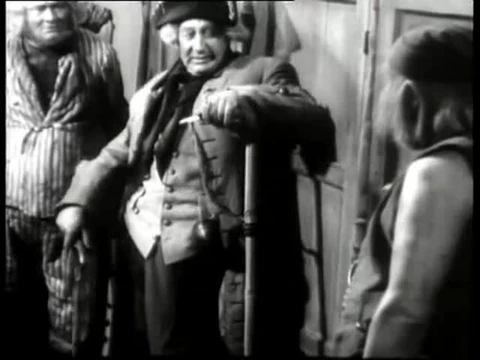
Director John Cromwell first noticed Davis while reviewing a print of Michael Curtiz's The Cabin in the Cotton, and her portrayal of a femme fatale immediately evoked the slatternly waitress Mildred Rogers in Maugham's novel. Producer Pandro S. Berman, who had already secured the story for Leslie Howard, agreed to the pairing, and W. Somerset Maugham himself backed the choice. The real obstacle was Davis's own studio. Jack L. Warner feared the role would shatter her glamorous screen image, and he reportedly shared that concern with other actresses who passed on the part, including Katharine Hepburn, Irene Dunne, and Ann Harding. Davis persistently lobbied Warner through the production of several other pictures before a studio trade with RKO, triggered by Mervyn LeRoy's desire for Dunne on Sweet Adeline, finally unlocked the deal. To prepare, Davis hired an English housekeeper to coach her in a subtle cockney accent, a detail she kept secret from her tutor to avoid exaggeration.
The Story of Obsession and Liberation
At its core, the film traces a young man's painful entanglement with a woman who neither loves nor respects him. Philip Carey, a sensitive British artist with a club foot, abandons his painting career in Paris after his teacher tells him he lacks talent and turns to medicine in London. His studies are derailed by an obsessive, one-sided passion for Mildred Rogers, a tearroom waitress whose signature reply to his romantic overtures is the maddeningly indifferent "I don't mind." She manipulates his feelings, rejects his proposal, marries a loutish salesman, and repeatedly returns to him in moments of need—first pregnant and abandoned, later destitute and ill with tuberculosis. Between these episodes, Philip finds tentative comfort with Norah, a considerate romance writer, and later with Sally Athelny, the tender daughter of an elderly patient. The film's title captures its central insight: each relationship is a form of bondage, binding Philip to Mildred, Norah to Philip, and Mildred to Emil. Only Mildred's death in a charity ward, confirmed to Philip as a physician, finally severs the chain and allows him to plan a future with Sally.
Production and Creative Collaboration
The film's genesis involved an unusual chain of connections. Cromwell's eye, however, landed on Davis instead. The screenplay was ultimately written by Lester Cohen. On set, tensions simmered between the American star and the predominantly British cast. Leslie Howard and fellow British performers were openly displeased that an American actress had been chosen for what they saw as a quintessentially English role. Davis recalled that Howard would read a book off-stage while throwing his lines at her during her takes, a behavior she found deeply distressing. Despite these frictions, the collaboration produced what critics would later identify as Davis's defining performance.
Cultural Significance and Legacy
Warner Bros. executives, including Jack L. Warner, believed the part would irreparably damage Davis's screen image, and that same aversion reportedly led Katharine Hepburn, Irene Dunne, and Ann Harding to decline the role. Yet Davis's commitment to the part, her meticulous preparation, and her willingness to portray a character who was unattractive, cruel, and morally compromised proved transformative. Critics have since regarded Of Human Bondage as the film that made Bette Davis a star, launching a career that would span decades and redefine what audiences expected from a leading lady. The film stands as a testament to the power of an actress choosing a role that challenged the conventions of her era rather than reinforcing them.
More in British Literary Classics 1-17
Spotted an error? Know more?
This is a living reference — every entry is fact-audited, and reader corrections feed straight into our audit queue. Suggest an edit · See this site's audit record